
250,000+ empowered students

Already a member? Log In
250,000+ empowered students
Already a member? Log In
The NREMT updated its exam format in 2026, and students still studying with older question banks or traditional flashcard methods are walking in underprepared. If you're testing this year, you need to know what's different and how to train for it.
The NREMT made structural changes to how the exam tests competency:
These changes reflect a push toward testing clinical judgment, not test-taking skill. The students who prepared for the old format are already behind.
Technology Enhanced Items are exam questions that go beyond picking a single answer. The NREMT added four new TEI types: Drag and Drop, Ordered Lists, Multiple Response, and Case Studies. Each one requires a different kind of interaction than standard multiple choice.
They test the same content as standard questions (airway, cardiac, trauma, OB, and so on) but they assess whether you can apply that knowledge, not just recognize it.
If your prep hasn't included TEI-style practice, you're going to hit these cold on exam day.

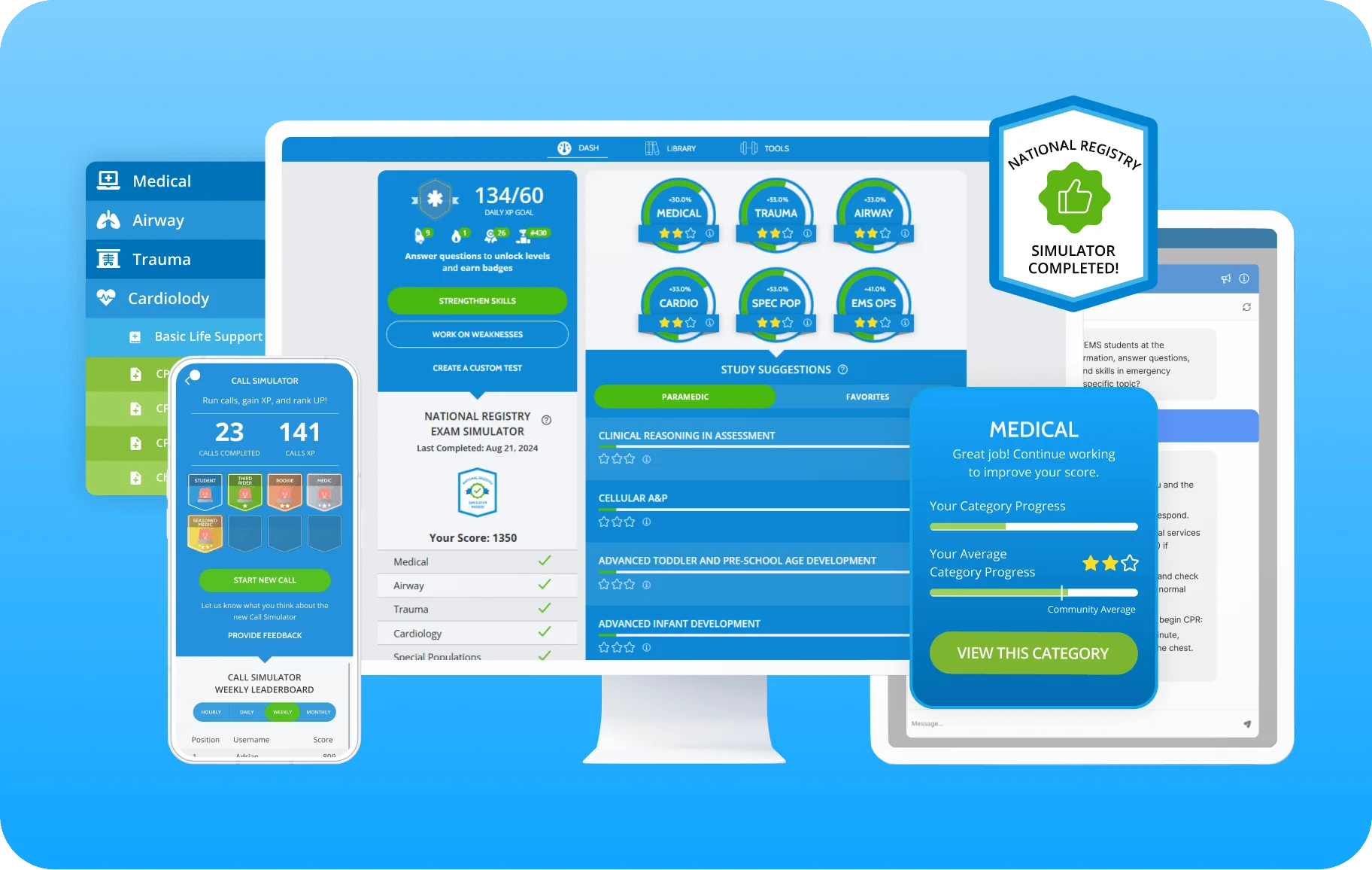
MedicTests' National Registry Simulator mirrors the testing structure and item presentation of the current NREMT exam, including TEIs and scenario-based assessments. Backed by a 100% pass guarantee.
See Membership PlansScenario-based questions present a clinical situation and then walk you through it in stages. Each clinical case has 3 phases:
The case is scored based on your correct assessment, interpretation, and treatment answer choices.
The only effective prep for an adaptive, scenario-based exam is adaptive, scenario-based practice.
That means working with a platform that mirrors how the real exam behaves - not static question sets in a PDF. Your practice tool should adjust to your performance in real time, expose you to clinical scenarios with sequential decision points, and include TEI-style question formats that reflect the updated item types.
MedicTests' National Registry Simulator mirrors the testing structure and item presentation of the current NREMT exam. The adaptive engine tracks your performance across clinical domains and routes harder content to your weak areas automatically. You practice until the exam format feels normal. And it's backed by a 100% pass guarantee.
The 2026 NREMT rewards students who trained for the exam's actual format: adaptive, scenario-driven, and clinically applied. Memorizing facts gets you to the starting line. Practicing the right way gets you through.
Join 250,000+ students who trained with MedicTests. The National Registry Simulator mirrors the current NREMT format, and every membership is backed by a 100% pass guarantee.
See Membership Plans